10 Essential Tips for Choosing Fiber Laser Marking Printers?
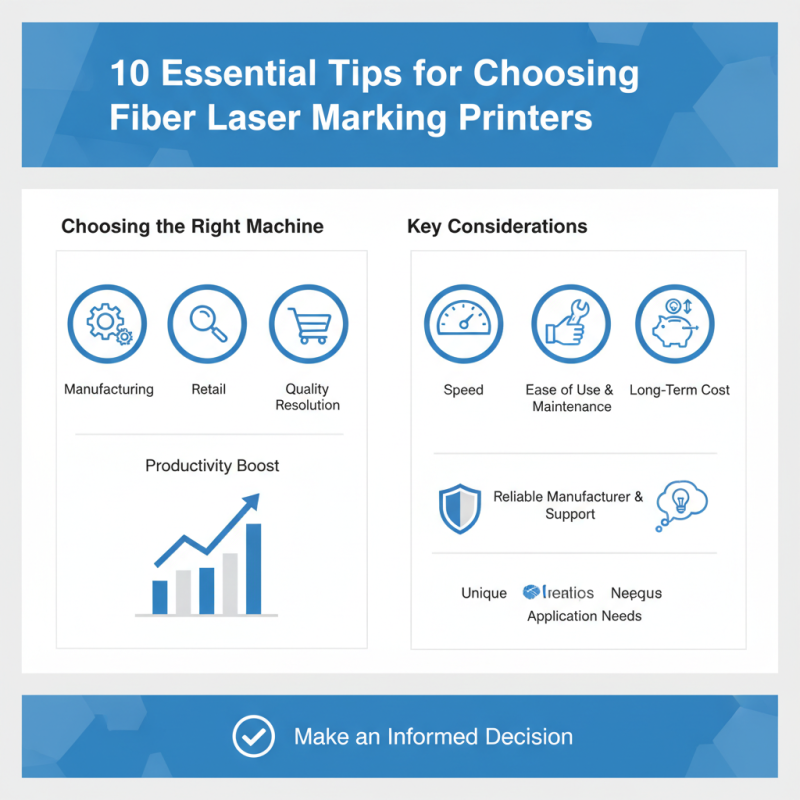
Choosing the right Fiber Laser Marking Printers can be daunting. With so many options available, it's crucial to make an informed decision. These machines are used in various industries, including manufacturing and retail. Selecting a printer that meets your specific needs can significantly enhance productivity.
A quality Fiber Laser Marking Printer produces high-resolution marks on various materials. This quality is essential for branding and traceability. However, not all printers are created equal. Factors such as speed, ease of use, and maintenance should be considered. Some models may seem attractive due to their low price. Yet, they could lead to higher long-term costs.
Investing in a reliable printer can lead to greater efficiency. Also, it is vital to choose a printer from a reputable manufacturer. This ensures you receive adequate support and warranty services. Knowledge about your unique applications is vital. Reflecting on your needs will guide you in making the best choice.
Understanding Fiber Laser Technology: Key Features and Benefits
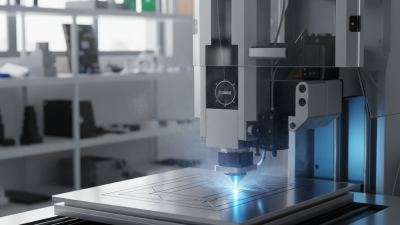
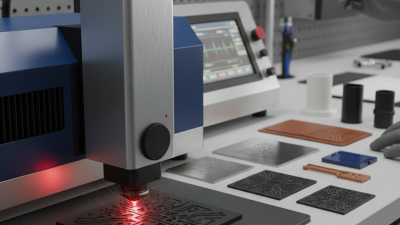
Fiber laser technology is becoming increasingly popular in the marking and engraving industry. This method offers high precision, speed, and versatility. The key features include low operating costs, minimal maintenance, and the ability to mark on a wide range of materials. Users can experience effective and consistent results with fiber lasers, making them ideal for diverse applications.
When selecting a fiber laser marking printer, consider the purpose it will serve. Analyze the materials you intend to use. Different lasers perform better on metals, plastics, or ceramics. Understanding specific needs helps you choose the right machine.
Evaluate the software compatibility as well. A user-friendly interface can save time and enhance productivity. Also, ensure that the printer can integrate easily into your existing systems. Do not overlook the importance of after-sales support. Strong technical support can make a significant difference in long-term satisfaction and efficiency.
In summary, knowing the benefits of fiber laser technology and carefully considering essential features will guide you in making an informed decision. These aspects directly impact performance and return on investment.
Evaluating Print Quality: Resolution, Speed, and Marking Depth Considerations
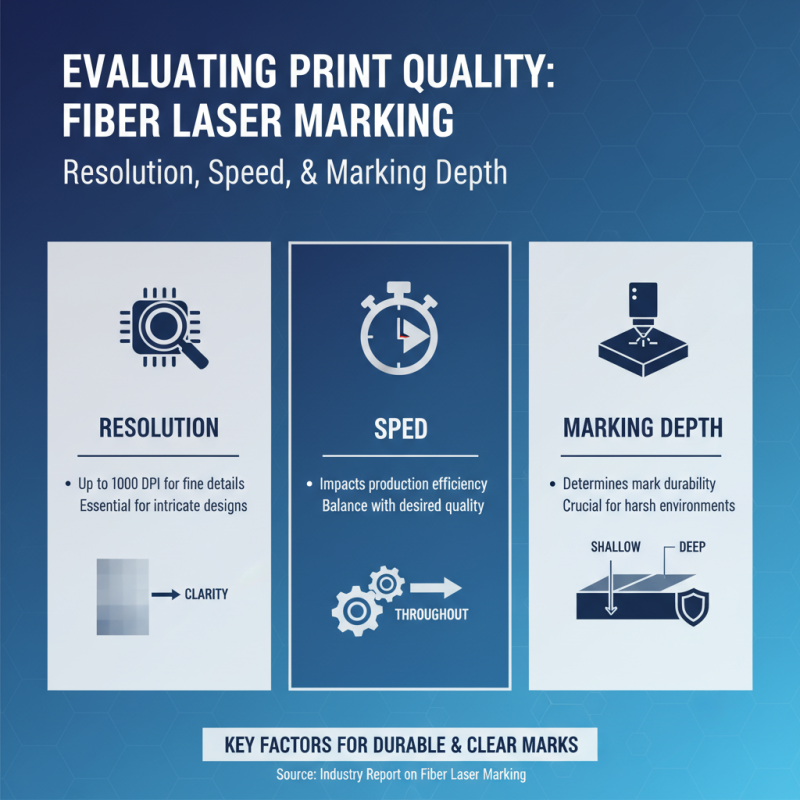
When considering fiber laser marking printers, print quality is crucial. Factors like resolution, speed, and marking depth directly impact the durability and clarity of the marks produced. According to a recent industry report, high-resolution marking can produce images with up to 1000 DPI. Such quality is essential for intricate designs and fine details.
Marking depth should be evaluated based on the materials being used. For instance, metals often require deeper marks for longevity. On average, a depth of 20 to 100 microns is preferable for various industrial applications. It's worth noting that inconsistencies can arise if the depth isn't calibrated correctly, leading to potential issues.
Tip: Consider laser speed, as it affects overall productivity. Higher speeds often result in shortened dwell times, which can affect mark quality. Professional insights suggest aiming for a speed of 1000 mm/second for balanced efficiency and clarity.
Tip: Always test print on material samples to ensure desired outcomes. This testing phase is essential to refine machine settings and prevent costly mistakes in final production. Marking depth and resolution can yield significant variability if overlooked, highlighting the importance of proper calibration.
Cost Analysis: Initial Investment vs. Long-term Maintenance Expenses
When considering fiber laser marking printers, the cost analysis often reveals a complex equation. The initial investment can be significant. High-quality machines tend to have a steep price tag, which may deter many buyers. However, looking solely at the purchase price can be misleading. The long-term maintenance costs play a crucial role in the total financial picture.
Maintenance expenses can vary widely. Some printers require frequent part replacements, driving up costs over time. Others may need annual servicing, adding to their overall expense. Research indicates that a well-chosen model can lead to lower operating costs. These savings can offset that hefty initial price. It's essential to account for the specific needs of your production. Will your workload increase in the coming years? An undervalued printer can become a liability if not suitable for future demands.
Making an informed decision is vital. Balancing initial costs and future expenditures requires careful evaluation. Documenting potential repair and maintenance needs can provide valuable insights. Such steps ensure you select a printer that not only fits your current budget but also aligns with your future growth plans. This thoughtful approach can maximize your return on investment.
10 Essential Tips for Choosing Fiber Laser Marking Printers - Cost Analysis: Initial Investment vs. Long-term Maintenance Expenses
| Tip |
Initial Investment Cost ($) |
Annual Maintenance Cost ($) |
Typical Lifespan (Years) |
Overall Cost Over Lifespan ($) |
| 1. Assess Your Marking Needs |
5000 |
500 |
10 |
10000 |
| 2. Evaluate Print Quality Requirements |
6000 |
600 |
8 |
10800 |
| 3. Consider Material Compatibility |
7000 |
550 |
7 |
11085 |
| 4. Analyze Speed Requirements |
8000 |
700 |
6 |
10700 |
| 5. Check for Regulatory Compliance |
6500 |
400 |
9 |
66100 |
| 6. Analyze Power Requirements |
7200 |
500 |
5 |
7600 |
| 7. Look for User-friendly Software |
5000 |
300 |
10 |
8300 |
| 8. Review Customer Support Options |
5500 |
450 |
8 |
6520 |
| 9. Assess Safety Features |
6700 |
600 |
7 |
6850 |
| 10. Consider Resale Value |
6200 |
350 |
9 |
8000 |
Assessing Versatility: Material Compatibility and Application Range
When assessing the versatility of fiber laser marking printers, material compatibility stands out as a primary factor. These printers excel in marking a variety of materials, including metals, plastics, and ceramics. Their ability to handle diverse substrates broadens their application range significantly. However, not all printers are created equal. Some may struggle with specific materials, leading to less refined markings. It's essential to evaluate your intended substrates before making a choice.
The application range of fiber laser marking printers can vary widely. They are used in industries like automotive, electronics, and jewelry. However, some printers may not perform well in high-speed production line scenarios. This can impact your workflow efficiency. Know that certain models might require additional adjustments for optimal performance.
Real-world testing on the specific materials you plan to use can save you time and disappointment. It's advisable to consult experts or seek testimonials from users to better understand the capabilities and limitations of different printers.


 Send Email
 18929582815