2026 How to Choose the Best Carbon Dioxide Laser Printers?
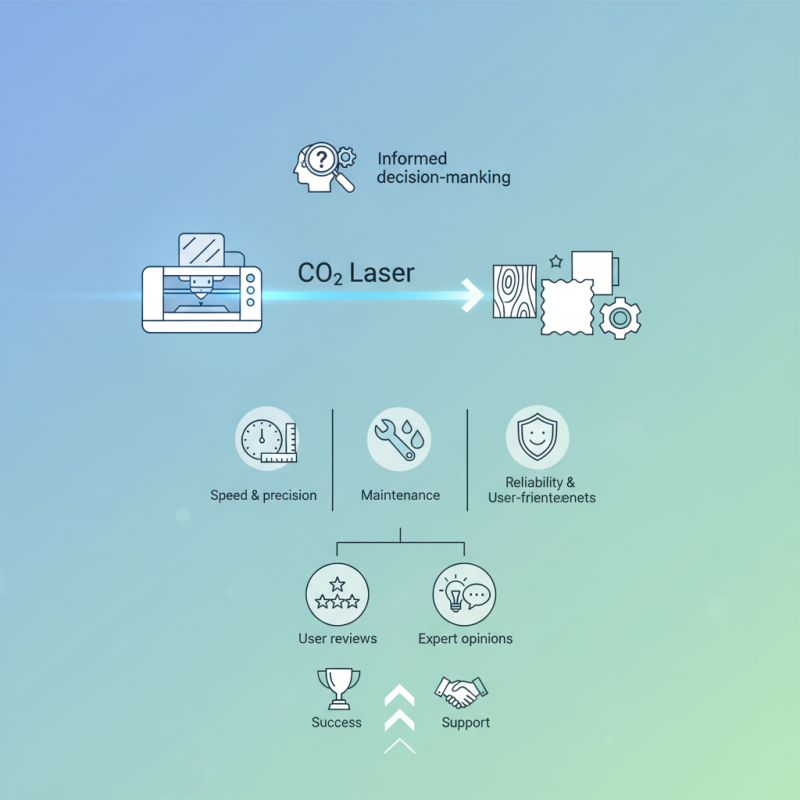
Choosing the right Carbon Dioxide Laser Printers can seem overwhelming. With numerous models and features available, it’s essential to approach this decision carefully. Industry expert Dr. Emily Chen, a leader in laser technology innovation, states, “The right printer can transform your workflow and enhance precision.” Her insights emphasize the importance of informed decision-making.
When comparing Carbon Dioxide Laser Printers, consider your specific needs. Different applications demand various features. For example, engraving materials requires precision and speed. Moreover, understand the maintenance requirements. Some models need more care than others. Evaluating these aspects can save time and resources in the long run.
It's crucial to reflect on your intended applications. Not all printers deliver the same performance. Prioritize reliability and user-friendliness in your selection. Delve into user reviews and expert opinions. This research can guide you toward the best choice. Factors like build quality and customer support are vital. Choosing the right printer influences your success in using Carbon Dioxide Laser Printers effectively.
Understanding Carbon Dioxide Laser Printers: An Overview
Understanding Carbon Dioxide Laser Printers: An Overview
Carbon dioxide laser printers are popular for their precision and versatility. These printers use a high-powered carbon dioxide laser to engrave or cut various materials. They can handle wood, acrylic, leather, and even glass. The laser technology allows for detailed designs that traditional printers cannot achieve. This capability makes them ideal for crafts, signage, and industrial applications.
When considering a CO2 laser printer, one must evaluate several factors. The power of the laser is crucial; higher power can cut through thicker materials, but it can also increase risks. Cooling systems are another essential consideration. Ineffective cooling can lead to overheating and potential damage. Users often overlook maintenance needs, which can affect long-term reliability. Choosing a model with user-friendly maintenance features can save headaches later on.
While versatility is a strength, it also presents challenges. Different materials require different settings, and users must be diligent to adjust parameters accordingly. Experimentation is necessary to achieve desired results. Understanding the nuances of your machine ensures optimal usage, helping avoid common pitfalls. Overall, knowledge and practical experience play significant roles in operating CO2 laser printers effectively.
Key Features to Look for in Carbon Dioxide Laser Printers
Choosing the right carbon dioxide laser printer requires careful consideration of several key features. One of the most significant aspects to assess is the power output. Typically, lasers range from 30W to 150W. Higher wattage provides the ability to cut through thicker materials, enhancing versatility.
Speed is another critical factor. According to a report by MarketsandMarkets, laser printers can achieve speeds of over 100 inches per second. This ensures quick production time, which is essential in a fast-paced environment. However, high-speed operations might compromise detail. It's vital to balance speed and precision for optimal results.
Moreover, engraving capabilities play a crucial role. Some printers excel at detailed intricate designs, while others focus on larger cuts. It's beneficial to evaluate the resolution and detail capability of each model. A printer with a lower resolution may lead to poor-quality outputs, necessitating a careful review of user experiences. Considering these features will lead you to a well-suited carbon dioxide laser printer for your needs.
Comparison of Key Features in Carbon Dioxide Laser Printers (2026)
Evaluating Print Quality and Resolution in Laser Printers
When evaluating print quality and resolution in carbon dioxide laser printers, specific factors come into play. Print quality is not just about clarity; it includes color accuracy and detail. A well-calibrated printer reproduces vibrant colors, sharp images, and fine details. Users might find that even slight misalignments can hinder overall quality, making calibration essential.
**Tip:** Regular maintenance is vital. Clean the optics and replace worn parts to maintain high-quality prints.
Resolution is measured in DPI (dots per inch). A higher DPI often indicates better quality. However, users must consider the material being printed on. Some substrates absorb ink differently, affecting the final result. One might find that a printer with lower DPI outperforms a higher DPI printer on certain materials.
**Tip:** Test different settings and materials. This helps identify the optimal combination for superior prints.
2026 How to Choose the Best Carbon Dioxide Laser Printers? - Evaluating Print Quality and Resolution in Laser Printers
| Printer Model |
Print Quality (DPI) |
Print Speed (pages/min) |
Max Media Size (inches) |
Price Range (USD) |
| Model A |
1200 |
25 |
24 x 36 |
$2500 - $3000 |
| Model B |
1500 |
30 |
18 x 24 |
$3500 - $4000 |
| Model C |
1000 |
20 |
12 x 18 |
$1500 - $2000 |
| Model D |
720 |
15 |
24 x 30 |
$1800 - $2300 |
Considerations for Maintenance and Operating Costs
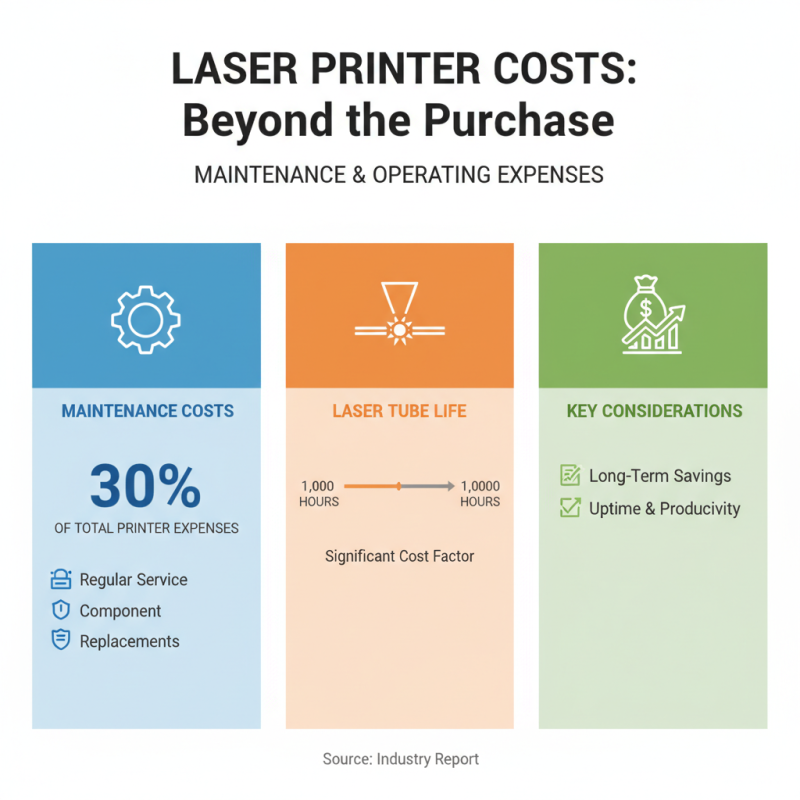
When choosing the best carbon dioxide laser printers, maintenance and operating costs are critical. According to a recent industry report, maintenance costs can account for up to 30% of total printer expenses. Regular service checks and component replacements can quickly add up. Laser tube life, for example, generally ranges from 1,000 to 10,000 hours, making this a significant consideration.
Operating costs heavily rely on material and energy consumption as well. Carbon dioxide laser printers typically use higher power than other printing technologies. A study by the Laser Institute of America found that energy consumption can vary significantly. This variability can affect the expense per printed unit. It's advisable to investigate the exact power requirements and discuss these with potential suppliers.
Furthermore, the intricacy of the printer's design can influence both maintenance needs and costs. Some intricate models require specialized training for operators. An uninformed operator may lead to unnecessary wear or damage. Evaluating user experience and training programs is essential for long-term efficiency. Overall, when examining potential purchases, these aspects warrant careful consideration to avoid unexpected financial burdens later.
Comparing Top Carbon Dioxide Laser Printer Brands and Models
When selecting a carbon dioxide laser printer, many brands stand out in terms of performance and reliability.
Recent industry reports indicate that the CO2 laser printer market is expected to grow by 5.9% annually through 2026. This growth reflects the increasing demand for precision cutting and engraving in various sectors.
Consider factors such as print speed and accuracy. For example, some models can achieve speeds of up to 100 inches per second, which significantly boosts productivity. Additionally, examine the wavelength efficiency of the laser. A wavelength of 10.6 micrometers is often ideal for a variety of materials, including wood, acrylic, and leather.
Tips: Evaluate the user-friendly software that comes with the printer. Easy-to-use design software can reduce the learning curve.
Furthermore, customer support and warranty options play a crucial role in long-term satisfaction. A recent survey found that 78% of users value strong after-sales support.
Moreover, it’s essential to review the maintenance requirements of different models.
Maintenance can often be overlooked, yet it impacts longevity. Inconsistent service can lead to decreased performance and unexpected costs.
Be prepared to invest time in upkeep for optimal results.

 Send Email
 18929582815