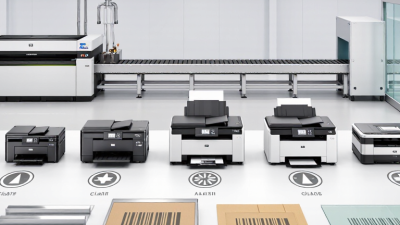
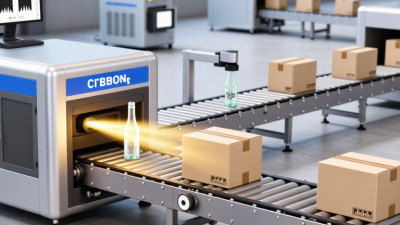
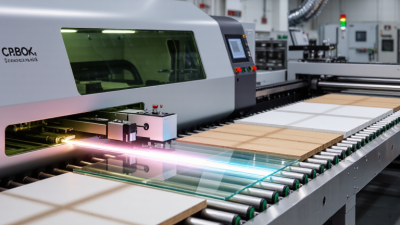
Carbon Dioxide Laser Printers can mark packaging, coated metals, wood, and many plastics without touching the workpiece. In a busy production cell, that means no ink cartridges to replace and no physical tool pressing against each part. A serial number can be etched onto a dark polymer housing as it moves along a conveyor. The result depends on the material, settings, and line speed; one setup will not suit every job.
Laser-manufacturing expert Dr. Reinhart Poprawe, former director of Fraunhofer ILT, offers relevant expertise in industrial laser technology. However, no source text was provided to verify a sentence he said specifically about Carbon Dioxide Laser Printers. Rather than invent a quotation, this introduction uses a practical editorial takeaway: “A reliable mark is one that remains clear on the finished part.” That is not a quotation attributed to Dr. Poprawe.
The case for these printers rests on more than speed. Manufacturers should consider mark contrast, readability, maintenance, integration, and the material’s response to heat. A sample may look crisp under bright inspection lights, then become faint on a curved surface. That detail matters. Carbon Dioxide Laser Printers can be a strong fit for repeatable, non-contact marking, but only after trials confirm the result on actual parts and production conditions. A small test run is worth the time.
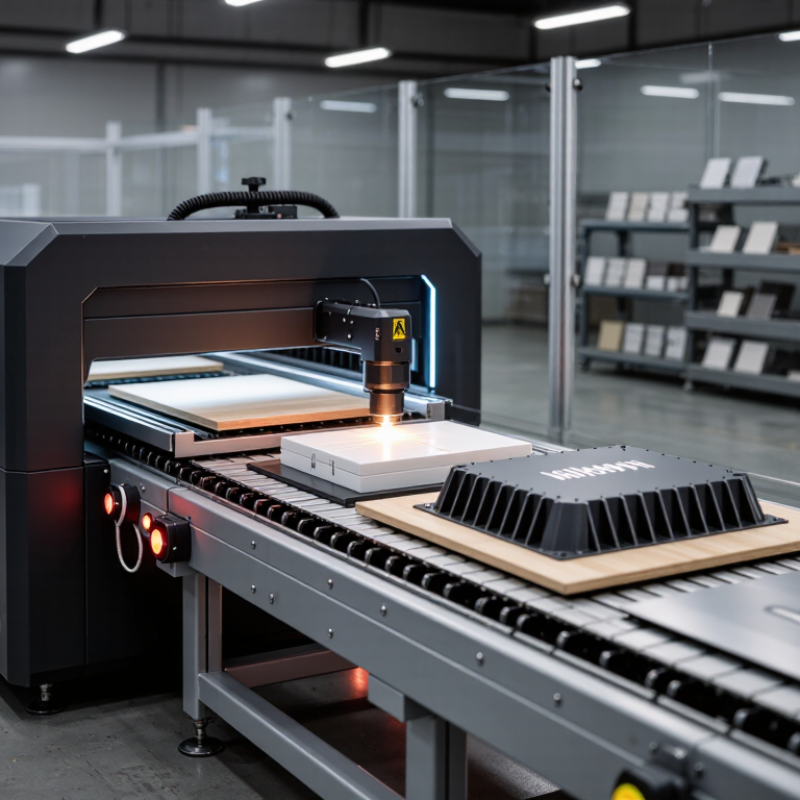
A carbon dioxide (CO2) laser printer is a non-contact marking system. Its laser source creates an infrared beam, commonly near a 10.6-micrometre wavelength. Mirrors guide the beam, and a focusing lens concentrates it onto a material’s surface. The beam’s heat changes that surface, creating text, codes, or simple graphics without ink or a physical tool. Nozzle-free marking. In manufacturing, this can reduce consumable use and avoid pressure on delicate parts.
The process depends on how the material responds to heat. CO2 lasers often mark paper, wood, glass, and many plastics, while untreated metals may need a different laser type or a suitable coating. That sounds simple. It isn’t always. Power, speed, focus, and surface finish affect contrast and edge quality. A setting that produces a crisp code on one plastic may melt another. Operators should test representative samples, inspect marks for readability, and use suitable fume extraction. The first result is not always the right one. Careful trials help determine whether the system fits a production line’s materials and marking requirements.
A CO2 laser marking system has four practical parts: a laser source, beam path, scanning head, and controller. The source generates infrared energy, while mirrors guide it toward a focusing lens. The controller sets power, speed, and marking position. A fixture keeps each part steady. Small shifts matter. Exhaust and guarding help manage fumes and protect operators, especially when processing coated materials.
CO2 lasers heat a surface rather than applying ink, so results depend on the material and its finish. On wood or paper, the beam can remove or darken material. On glass, it may create a frosted appearance. Some plastics respond well; others can melt, discolor, or release unwanted fumes. Operators adjust focus, power, and travel speed to balance contrast with edge quality. Too much heat can widen lettering or distort thin packaging. A test grid helps, but it cannot replace checking a full production run. Results can be less uniform than expected.
Tips: Test samples from the actual production batch. Check mark contrast, edge detail, and ventilation before setting a line speed. Keep parts clean and positioned consistently.
Carbon dioxide laser printers are often used to mark or engrave nonmetallic products during manufacturing. On packaging lines, they can add batch codes, dates, and small text to paperboard cartons. The mark is created without ink, so there are no cartridges to replace or wet labels to dry. Still, print contrast depends on the carton’s coating and color.
Wood shops use CO₂ lasers to engrave panel labels, product details, and decorative patterns. The beam can produce crisp lines on plywood and some finished surfaces, though resin content may cause uneven darkening. Glass containers are another application: the laser can create a frosted identification mark on the surface. Test samples first. Curved bottles and changing line speeds can make consistent placement harder than expected.
Manufacturers also mark acrylic signs, plastic components, and coated materials. Suitability varies by material formulation; some plastics can discolor poorly or release hazardous fumes when processed. Check the material supplier’s guidance and use appropriate extraction. A practical trial should examine readability, cycle time, and mark durability after handling. It may reveal trade-offs that a product sheet misses.
In industrial production, CO2 laser printers can mark dates, batch codes, and logos directly onto cartons, labels, wood, glass, and many polymers. The beam works without touching the product, so there are no ink cartridges or wet labels to replace. Less mess. On a packaging line, operators can change a code digitally instead of swapping printed stock. That can simplify short runs and reduce leftover labels. Typical CO2 systems emit infrared light near 10.6 μm, which is absorbed effectively by many organic materials. Results still depend on the material, coating, and surface finish.
The business case is strongest where lines need durable, legible marks with fewer consumables. MarketsandMarkets’ Laser Marking Market report estimated the overall market at about US$3.0 billion in 2022 and forecast US$4.7 billion by 2027. That forecast signals wider industrial interest in laser marking; it does not measure CO2 printers alone. A laser mark can resist smearing during handling, but speed and contrast must be tested on the actual production material. CO2 lasers are not a universal answer: bare metals often need another process, and some plastics discolor unpredictably. I would test samples under real line speed, not just on a clean bench. Extraction and maintenance also matter; an easy-to-ignore smoke deposit can blur a crisp code.
A practical overview of CO₂ laser marking and coding in production. Suitability and results depend on the material, surface, machine configuration, and process settings.
| Production Dimension | Typical Benefit | Industrial Production Consideration |
|---|---|---|
| Laser wavelength | Many industrial CO₂ systems operate at approximately 10.6 μm, a wavelength that interacts effectively with many organic and non-metallic materials. | The wavelength is one reason CO₂ systems are commonly used for coding and marking materials such as paper, cardboard, wood, and some plastics. Confirm compatibility with the exact material formulation. |
| Commonly marked materials | Can produce marks on paperboard, paper labels, wood, glass, and selected plastics, films, and coated surfaces. | Results vary with color, additives, coatings, thickness, and surface finish. Test samples from the actual production material before choosing a process. |
| Marking methods | Depending on the substrate and settings, marking may involve surface ablation, engraving, or a visible color or contrast change. | Choose settings to achieve readable codes while controlling depth, heat effects, and appearance. Some materials may discolor, melt, char, or be unsuitable for laser processing. |
| Consumables | The marking process does not require ink or a ribbon at the point of marking. | This can reduce routine consumable handling compared with ink-based coding, although the system still requires maintenance and may need extraction filters or other process equipment. |
| Contact with the product | Marking is non-contact, so the laser does not need to press against the product surface. | Non-contact processing can be useful for moving products and delicate surfaces. Product positioning, focus, and line stability still affect mark quality. |
| Code durability | A laser-created mark can be durable because it is formed by changing or removing surface material rather than applying a separate ink layer. | Durability is material- and process-dependent. Verify readability after relevant handling, abrasion, moisture, temperature, or cleaning exposure. |
| Production-line integration | Laser marking systems can be integrated with production lines and triggered by sensors or control systems. | Successful integration requires suitable mounting, product detection, code data handling, guarding, extraction where needed, and validation at the actual line speed. |
| Marking speed | Laser systems can mark rapidly in appropriate applications, supporting continuous production workflows. | There is no single universal speed: achievable throughput depends on code size and content, material response, marking area, product motion, and required mark quality. |
| Print content | Suitable systems can mark text, dates, batch information, serial numbers, and machine-readable codes. | Validate code contrast, dimensions, and readability using the relevant inspection method and applicable production requirements. |
| Safety and environmental controls | A properly designed installation can support consistent marking within a controlled production process. | CO₂ lasers are hazardous optical sources. Use appropriate guarding, interlocks, procedures, and material-specific fume extraction; assess emissions and fire risks for the process. |
| Best-fit applications | Often a strong option for non-metallic packaging and products where a permanent, non-contact mark is desired. | Compare against other marking methods when processing bare metals, heat-sensitive materials, or substrates that require a specific color, depth, or validated code performance. |
Selection note: Treat these points as general guidance, not guaranteed machine specifications. Run material and line trials to confirm mark quality, throughput, safety controls, and total operating requirements.
Why Use Carbon Dioxide Laser Printers for Manufacturing?
A CO₂ laser printer can mark wood, paper, glass, plastics, and coated materials without ink or physical contact. But suitability depends on the exact substrate: some plastics can discolor unevenly or release hazardous fumes. Test production samples, not just a supplier’s demonstration piece. Check mark contrast, line speed, and durability after cleaning or abrasion. Small details matter.
When choosing a system, compare the laser’s power and marking field with your line speed and product dimensions. Ask how easily it connects to conveyors, sensors, and existing control systems. Include extraction, guarding, service access, and operator training in the cost calculation. MarketsandMarkets’ 2023 Laser Marking Market report estimated the market at USD 3.0 billion in 2023 and forecast USD 4.6 billion by 2028. That growth signals wider adoption, but it does not prove a CO₂ unit fits every factory. Match the specification to your material and output targets.
Tips: Run a trial using real parts at normal line speed. Record legibility, cycle time, and rejected pieces. Ask for the test conditions in writing; a clean sample can hide production-floor problems.
Wavelength affects how a laser interacts with a material. CO₂ lasers commonly operate at 10.6 μm and are often suited to materials such as paper, cardboard, wood, glass, and many plastics. Metals and specific materials may require another wavelength or a different marking process. Confirm compatibility with your material, line speed, mark requirements, and production environment before choosing a printer.