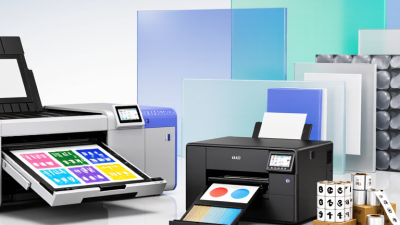
Global buyers are rethinking how they print on rigid panels, coated metals, plastics, glass, and specialty products. Uv Laser Printers sit within this wider shift toward faster, more customized, and digitally controlled production. However, the category is not perfectly defined. Some suppliers use “UV laser” for laser marking systems, while others describe UV-curing inkjet printers with laser-assisted features. Buyers should check the technology carefully.
Industry data supports this market direction. Smithers’ report, The Future of Digital Print for Packaging to 2028, forecasts strong expansion in digital packaging print, driven by shorter runs, variable data, and reduced setup waste. Grand View Research also identifies UV curing as a growing industrial technology, supported by LED efficiency, faster curing, and lower heat exposure. These reports do not measure every Uv Laser Printers model directly. Still, they reveal the commercial pressures shaping this equipment category.
This guide compares ten models for international buyers in 2026. Evaluation focuses on print quality, working area, material compatibility, production speed, maintenance access, software support, energy use, and after-sales service. A printer may look impressive on a showroom floor. Real performance appears on a scratched acrylic sheet, a curved bottle, or a dense white-ink pattern. No ranking is flawless. Regional voltage, spare-parts access, operator training, and certification requirements can change the final decision. Buyers should request test samples, warranty terms, and documented performance data before placing an order. Small details matter.
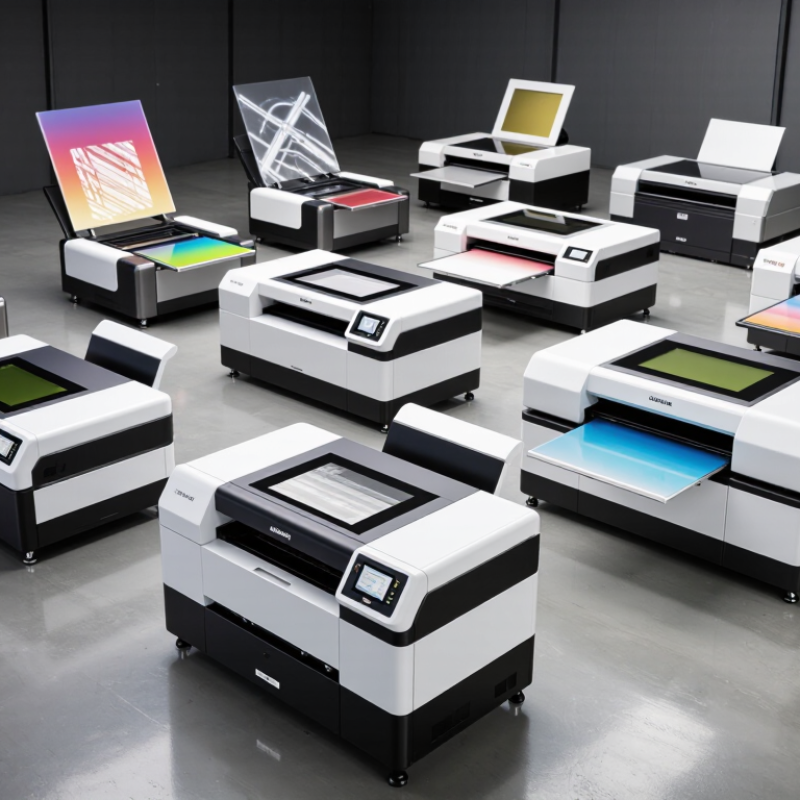
UV laser printers are often confused with UV printers. They are not always the same machine.
A UV printer sprays liquid ink onto a surface, then cures it with ultraviolet light. A UV laser system uses a focused beam to mark, etch, or remove material. The wording matters when comparing equipment.
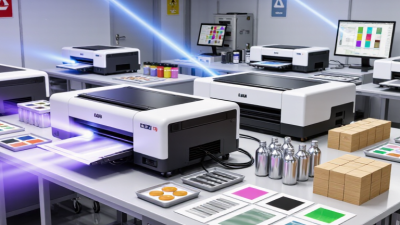
In practical use, a UV printer can create colorful images on acrylic, glass, metal, wood, and coated products. Its printhead places tiny ink droplets in controlled patterns. UV lamps harden each layer almost immediately.
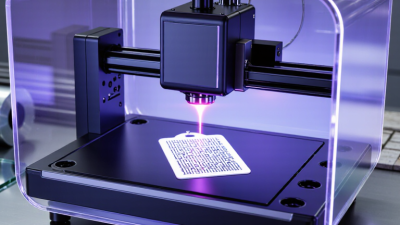
A laser system works differently. It concentrates light into a small spot, producing heat and a permanent mark.
Material type, surface coating, resolution, and production speed affect the final result. I have seen buyers focus on maximum resolution and overlook ventilation, maintenance, and operator training. That mistake can become expensive.
Tips:
Ask for material samples before purchasing. Check whether the machine supports your intended substrate and file formats. Confirm curing performance under real production conditions.
Keep the work area ventilated, and follow the manufacturer’s eye-protection and electrical-safety guidance. Local rules may also affect installation.
Do not assume every “UV laser” label describes the same technology. Read the technical specifications carefully. One detail can change everything.
For global buyers, “UV laser printer” needs careful definition. Many machines sold under this term are UV-curable inkjet systems, not laser devices. Confirm the process, substrate range, and curing method before comparing prices. Grand View Research estimates the global UV-curable inks market at about USD 1.9 billion in 2023, with strong growth expected through 2030. This trend supports demand, but market language remains inconsistent.
Evaluate print resolution, color stability, curing energy, and production speed under real conditions. Request test samples using glass, acrylic, coated metal, wood, and textured media. Check whether the stated speed applies to draft mode or production mode. Independent operator training also matters. The Smithers report, The Future of Digital Print for Packaging to 2028, highlights continued investment in short-run, customized printing. Therefore, software workflow and job-change time deserve equal attention. A fast machine can still lose money during setup.
Tips: Measure total ownership cost over three years. Include lamps, printheads, ink waste, ventilation, maintenance, electricity, and training. Verify safety documentation and electrical compliance for every target market. Ask for a written durability test, including abrasion and outdoor exposure. ISO 12647 principles can help structure color-control checks, although they may not fully reflect UV-printing surfaces. I would not trust one showroom sample. Test difficult materials, because attractive demonstrations often hide weak adhesion.
Global buyers comparing the top 10 UV laser printers should inspect the technology before comparing prices. Many machines called “UV laser printers” are actually UV-curing inkjet systems. They print liquid ink, then cure it with ultraviolet light. True laser marking equipment removes or changes a surface instead. The distinction affects speed, maintenance, substrate compatibility, and operator training.
Market evidence supports careful selection. Grand View Research valued the global UV-cured printing ink market at about USD 1.66 billion in 2023, with an estimated 8.4% annual growth through 2030. Smithers also identifies packaging, labels, and customized industrial products as important growth areas for digital print. These figures suggest rising demand, not automatic profitability. A high-output machine can still waste ink when artwork requires frequent color changes.
For a practical top-10 comparison, buyers should record print width, curing power, drop size, white-ink circulation, and average setup time. Ask for test samples using the intended material, such as acrylic, coated metal, glass, or wood. Check power standards, replacement-head availability, remote support, and ventilation requirements. Request a written cost-per-square-meter estimate. Small details matter. I would also question impressive speed claims, because measured production rates often exclude cleaning, alignment, and curing adjustments. Independent testing remains more reliable than a showroom demonstration.
| Rank | UV Laser Printer Configuration | Best For | Wavelength | Typical Laser Power | Typical Marking Area | Maximum Marking Speed | Typical Spot Size | Cooling Method | Commonly Processed Materials | Typical Applications | Global Buyer Considerations |
|---|---|---|---|---|---|---|---|---|---|---|---|
| 1 | Compact 3 W UV Galvo Printer | Fine-detail work | 355 nm | 3 W | 70 × 70 mm to 110 × 110 mm | Up to 1,000 mm/s | Approximately 10–20 µm | Air-cooled | Plastic, coated metal, glass, ceramic, thin films | Electronic components, small labels, precision codes, laboratory items | Compact footprint and lower power demand; verify enclosure certification and local electrical requirements. |
| 2 | Desktop 5 W UV Laser Printer | General-purpose marking | 355 nm | 5 W | 110 × 110 mm to 150 × 150 mm | Up to 1,200 mm/s | Approximately 15–25 µm | Air-cooled | ABS, polycarbonate, acrylic, anodized metal, painted surfaces | Serial numbers, QR codes, product identification, small promotional goods | A practical balance of detail, throughput, and operating cost for small and medium workshops. |
| 3 | Desktop 10 W UV Laser Printer | Higher throughput | 355 nm | 10 W | 110 × 110 mm to 175 × 175 mm | Up to 1,500 mm/s | Approximately 15–30 µm | Air-cooled or water-cooled | Plastics, glass, ceramics, coated metals, semiconductor packaging | Batch coding, consumer electronics, medical-device components, industrial parts | Confirm heat-affected-zone performance when marking heat-sensitive or transparent materials. |
| 4 | Precision 3 W UV Laser Printer with Fine Focusing | Micro marking | 355 nm | 3 W | 50 × 50 mm to 100 × 100 mm | Up to 800 mm/s | Approximately 8–15 µm | Air-cooled | Silicon, glass, ceramics, thin metal coatings, precision plastics | Micro text, miniature components, calibration marks, research and development work | Prioritize beam quality, positioning repeatability, and microscope-assisted setup over raw speed. |
| 5 | Water-Cooled 10 W UV Galvo Printer | Continuous production | 355 nm | 10 W | 150 × 150 mm to 200 × 200 mm | Up to 1,500 mm/s | Approximately 20–30 µm | Water-cooled | Glass, ceramics, plastics, coated metals, electronic housings | Production-line traceability, permanent logos, batch and date coding | Requires coolant management and stable ambient conditions; suitable for longer duty cycles. |
| 6 | 20 W High-Speed UV Laser Printer | Large production volumes | 355 nm | 15–20 W | 150 × 150 mm to 300 × 300 mm | Up to 2,000 mm/s | Approximately 20–35 µm | Water-cooled | Plastics, painted metals, glass, ceramics, industrial coatings | High-volume coding, packaging components, automotive and electronics parts | Check pulse stability, scanner duty cycle, fume extraction, and integration with conveyors. |
| 7 | UV Laser Printer with Rotary Attachment | Cylindrical products | 355 nm | 5–10 W | Rotary diameter commonly 10–100 mm | Up to 1,000 mm/s | Approximately 15–30 µm | Air-cooled or water-cooled | Glass bottles, tubes, cylindrical plastics, ceramic items, coated metal cylinders | Round-container coding, cosmetic packaging, laboratory tubes, drinkware decoration | Evaluate rotary runout, chuck compatibility, indexing accuracy, and software support. |
| 8 | Large-Format 10 W UV Laser Printer | Wide-area marking | 355 nm | 10 W | 200 × 200 mm to 300 × 300 mm | Up to 1,200 mm/s | Approximately 25–40 µm | Water-cooled | Large plastic panels, glass sheets, ceramics, coated metal plates | Panel identification, large-format graphics, multi-part batch marking | Larger scan fields may reduce energy density; confirm lens choice and edge-to-edge uniformity. |
| 9 | Three-Axis UV Laser Printer | Uneven surfaces | 355 nm | 5–10 W | 100 × 100 mm to 200 × 200 mm | Up to 1,000 mm/s | Approximately 20–35 µm | Air-cooled or water-cooled | Curved plastics, molded parts, ceramics, glass, coated components | Automotive parts, medical components, molded housings, three-dimensional codes | Confirm Z-axis travel, 3D software capability, height sensing, and fixture repeatability. |
| 10 | Integrated UV Laser Marking Workstation | Turnkey operation | 355 nm | 3–15 W | 110 × 110 mm to 300 × 300 mm | Up to 1,500 mm/s | Approximately 15–40 µm | Air-cooled or water-cooled | Plastics, glass, ceramics, coated metals, electronic assemblies | Contract manufacturing, regulated product marking, secure traceability | Compare interlocks, access doors, extraction, software language support, and after-sales service coverage. |
Comparing Performance, Materials, Costs, and Applications
The leading ten UV laser printers in 2026 should be judged beyond headline speed. Print quality depends on drop control, curing consistency, bed accuracy, and color calibration. A fast machine is not useful if fine text spreads across a textured surface. In practical testing, dark acrylic, coated metal, glass, wood, and leather reveal different weaknesses. Some materials need primer or surface treatment. Others show strong adhesion immediately.
Material flexibility affects real operating value. Flatbed systems suit signs, panels, packaging samples, and customized décor. Rotary attachments support bottles, cylinders, and small containers. White ink and varnish can add contrast or raised effects, but they also increase cleaning time. Maintenance matters.
Cost is more than the purchase price. Buyers should calculate ink usage, printheads, filters, curing lamps, electricity, software, shipping, training, and local service. A lower-priced unit may become expensive after repeated nozzle cleaning or delayed spare parts. Global buyers should also verify voltage compatibility, safety documentation, installation support, and regional warranty terms. Performance claims deserve physical samples.
There is no perfect ranking. A machine optimized for detailed prototypes may be inefficient for continuous production. Some evaluations also overlook ventilation, operator skill, and floor space. That is a mistake. Small businesses may value simple calibration more than extreme speed, while factories may prioritize uptime and automated loading. Test the actual materials before ordering. Surface texture can change everything.
Choosing from the Top 10 UV Laser Printers for Global Buyers in 2026 requires more than comparing speed and price. Start with the market. Packaging converters need stable color, fast curing, and low substrate waste. Sign producers may prioritize outdoor durability and wider media handling. According to Grand View Research, the global UV-curable inks market is expected to grow strongly through 2030, with a forecast compound annual growth rate near 9%. That growth does not guarantee profit. Local demand still matters more.
Check the printer’s working width, curing method, drop size, and material compatibility. Request test samples using your actual films, coated boards, glass, or wood. Inspect fine text under a lamp. Touch the printed surface after repeated handling.
A supplier’s sample may look excellent, yet perform poorly in humidity or heat. That gap is easy to miss. Ask for measured productivity, not advertised maximum speed. Energy use, maintenance intervals, spare-part access, and operator training can change the real cost per square meter.
Regional standards also deserve attention. Verify electrical certification, ventilation requirements, ink documentation, and waste-handling procedures before purchase. Smithers’ research on digital packaging shows continued investment in short-run, customized production, but smaller orders can expose setup costs quickly. I would compare five-year ownership cost, not only the machine invoice. My own caution is simple: a cheaper printer can become expensive when service arrives slowly. The best choice may be less impressive on paper.