Leave Your Message
Choosing among the 2026 Top Carbon Dioxide Laser Printers for Global Buyers requires more than comparing wattage and price. A reliable purchase begins with the application. Consider acrylic sheets, wooden panels, glass, rubber, textiles, or coated metals. Each material responds differently to a 10.6-micrometer CO2 laser beam. A printer that cuts cleanly through six-millimeter acrylic may perform poorly on dense hardwood.
Dr. Reinhart Poprawe, a respected laser-processing expert, offers a useful principle: “A laser is only as good as the process it enables.” This idea remains highly relevant. Buyers should examine cutting speed, engraving resolution, cooling stability, exhaust design, software compatibility, and replacement-part access. A powerful tube cannot compensate for weak motion control or inconsistent focusing. Small details matter. A misaligned mirror can leave dark edges and uneven lettering.
Global buyers also need to assess supplier experience and service quality. Ask for material samples, warranty terms, installation guidance, and documented safety certifications. Confirm voltage requirements before shipment. Check whether local technicians can support repairs. These steps feel ordinary, yet they prevent expensive delays.
No ranking is perfect. Product specifications may change, and published performance can reflect ideal workshop conditions. Real results depend on humidity, material quality, maintenance habits, and operator training. That uncertainty deserves attention. The strongest Carbon Dioxide Laser Printers are not always the fastest or most expensive models. They are machines that deliver repeatable results, practical operating costs, and dependable support across demanding production environments.
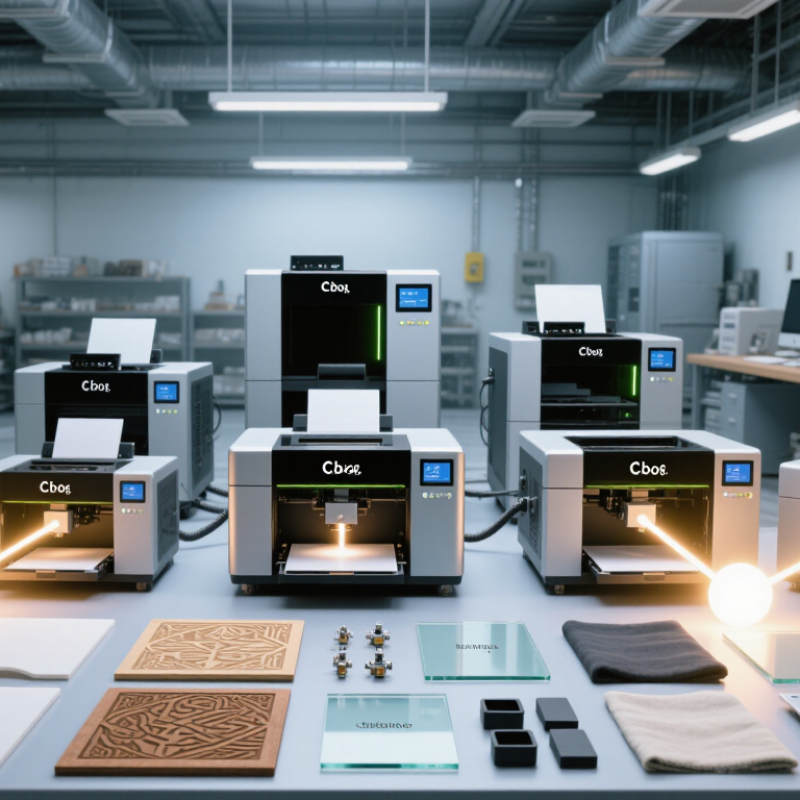
Carbon dioxide laser printers are non-contact machines that use an infrared beam to create marks, text, or images. Their laser source contains a gas mixture, commonly producing a wavelength near 10.6 micrometers. This wavelength works well on non-metal materials such as paper, cardboard, wood, acrylic, glass, leather, and some coated products. The beam heats the surface, causing controlled engraving, cutting, or color change. Unlike ink printers, these systems need no cartridges or drying time. They are useful for packaging, product identification, decorative panels, and industrial labels. However, “printer” can be misleading. Many systems are actually laser marking or engraving machines.
Material testing matters. A setting that produces a clean mark on cardboard may burn wood or crack acrylic. I have found that small test grids reveal these differences faster than guesswork. Ventilation is essential because heated coatings and plastics can release harmful fumes. Operators also need enclosed work areas, suitable extraction, protective interlocks, and trained supervision. CO2 lasers usually perform poorly on untreated metal, so buyers should check material compatibility before comparing machine power or speed. Specifications alone do not guarantee reliable results.
Tips: Ask for sample tests using your actual material and artwork. Check beam alignment, cooling, software support, spare parts, and electrical compatibility for your region. Keep records of power, speed, and focus settings. Some results will still need adjustment. That is normal.
Comparative guide to CO₂ laser printing and marking systems based on typical industrial specifications
| System Type | Typical CO₂ Laser Power | Common Wavelength | Suitable Materials | Typical Marking or Printing Speed | Typical Working Area | Best-Fit Applications | Key Buying Considerations |
|---|---|---|---|---|---|---|---|
| Desktop CO₂ Laser Engraver | 30–80 W | 10.6 μm | Wood, acrylic, paper, cardboard, leather, glass and coated metals | Up to approximately 500–1,000 mm/s, depending on material and graphics | 300 × 200 mm to 600 × 400 mm | Prototyping, personalized products, signage and small-batch packaging | Enclosure size, ventilation, cooling method, autofocus and software compatibility |
| Industrial CO₂ Galvo Marker | 10–60 W | 10.6 μm or 9.3 μm | Plastic, glass, rubber, painted surfaces, films, wood and paperboard | Up to approximately 2,000–5,000 mm/s for suitable marking jobs | 50 × 50 mm to 300 × 300 mm | Batch coding, serial numbers, barcodes, logos and high-throughput identification | Galvanometer response, line quality, fume extraction and production-line integration |
| Conveyor-Mounted CO₂ Coder | 10–30 W | 10.6 μm | Flexible films, cartons, labels, bottles, pipes and coated packaging | Designed for continuous lines; commonly matched to conveyor speeds of 30–600 m/min | Marking field commonly 50 × 50 mm to 150 × 150 mm | Expiry dates, lot codes, batch numbers, barcodes and traceability data | Encoder and sensor support, IP rating, print contrast, uptime and line-speed synchronization |
| High-Power CO₂ Cutting and Engraving System | 80–300 W | 10.6 μm | Acrylic, wood, textiles, foam, rubber, paperboard and selected plastics | Approximately 300–1,500 mm/s for engraving; cutting speed varies significantly by thickness | 600 × 400 mm to 1,300 × 900 mm | Fabrication, display production, packaging inserts and industrial component processing | Bed size, motion accuracy, tube life, chiller capacity, extraction and material thickness |
| Sealed-Tube CO₂ Laser Printer | 20–100 W | 10.6 μm | Wood, acrylic, leather, glass, paper, fabric and coated products | Approximately 300–1,000 mm/s, depending on the motion platform | 300 × 200 mm to 900 × 600 mm | General-purpose engraving, education, workshops and light manufacturing | Tube replacement cost, optical alignment, cooling, maintenance access and spare parts |
| RF-Excited CO₂ Laser Marker | 10–60 W | 10.6 μm or 9.3 μm | Plastic, coated metal, films, glass, rubber and electronic components | Up to approximately 2,000–5,000 mm/s in suitable applications | 70 × 70 mm to 300 × 300 mm | Precision coding, electronics, automotive parts and continuous production | Pulse control, beam quality, duty cycle, service support and integration interfaces |
| 3D or Rotary CO₂ Marking System | 20–60 W | 10.6 μm | Cylindrical glass, bottles, tubes, curved plastic and rounded wooden products | Approximately 300–2,000 mm/s, depending on curvature and marking resolution | Rotary diameters commonly 20–150 mm; flat-field size varies by lens | Bottle decoration, cylindrical packaging, promotional products and traceability | Rotary chuck, object diameter range, software correction, focus control and fixture design |
Note: Specifications are representative industry ranges for 2026 purchasing research. Actual performance depends on laser source, optics, material, artwork, environmental conditions and system configuration.




 Send Email
 18929582815
