China Top 10 Small Character Inkjet Printer Manufacturers
Choosing the right supplier for Small Character Inkjet Printers requires more than comparing prices. Production speed, print clarity, ink stability, and technical support can directly affect daily operations. This guide introduces China’s top 10 small character inkjet printer manufacturers, focusing on practical performance and dependable service. These companies serve industries such as food packaging, beverages, pharmaceuticals, cosmetics, cables, and electronic components.
The evaluation considers print quality, coding speed, nozzle design, ink and solvent management, software usability, and maintenance requirements. Factory demonstrations, product specifications, customer feedback, and after-sales capabilities provide useful evidence. A reliable printer should produce sharp batch numbers on curved bottles, dusty cartons, or narrow plastic cables. Small details matter. A stable touchscreen, quick-start function, and accessible spare parts can save hours on a busy production line. Compliance documentation and transparent technical support also strengthen purchasing confidence.
However, no manufacturer fits every factory. A model that performs well in a clean beverage plant may struggle in a dusty workshop. Some rankings may change as technologies, service networks, and product updates develop. That limitation deserves attention. Buyers should request sample testing with their actual materials, ink types, line speeds, and environmental conditions. They should also confirm warranty terms, operator training, and long-term consumable costs before signing a contract. This overview aims to offer a balanced starting point, not an unquestionable verdict. Practical trials remain essential. Reliable evidence matters more than impressive brochures.
Small Character Inkjet Printers: Definition and Operating Principles
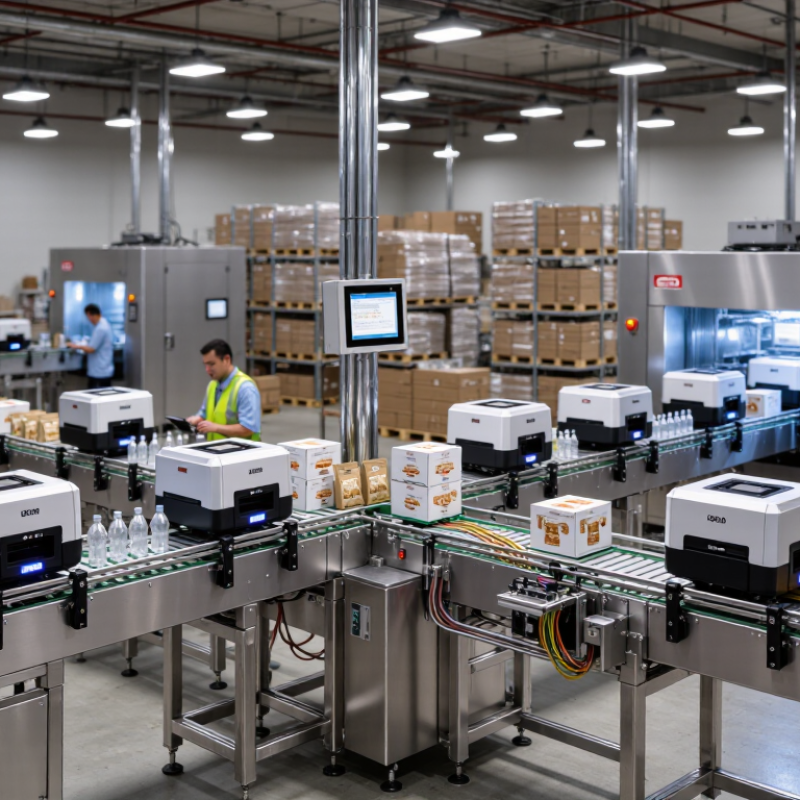
Small character inkjet printers, often called continuous inkjet (CIJ) printers, mark products with tiny, contactless characters. They print batch codes, dates, serial numbers, and production details on bottles, cables, cans, and cartons. MarketsandMarkets valued the global inkjet printer market at about USD 45.3 billion in 2023, showing the scale of the wider technology sector. CIJ remains important where production lines move quickly.
The operating principle is continuous and precise. An ink pump sends liquid through a microscopic nozzle, creating thousands of droplets each second. An electrically charged electrode controls selected droplets. Deflection plates then guide them toward the product surface, while unused droplets return through a recovery system. A typical printhead can maintain stable coding during line speeds above 100 meters per minute, although actual performance depends on ink, substrate, and maintenance.
It is not magic. Ink viscosity changes with temperature, and dust can disturb the nozzle. Operators should inspect filters, clean the printhead, and verify code readability during every shift. Smithers’ The Future of Coding and Marking to 2028 identifies reliability, traceability, and faster packaging lines as continuing industry priorities. In practice, a slightly imperfect installation may reveal more than a brochure. Poor grounding, vibration, or unsuitable ink can create blurred dots and missing characters. Specification work therefore needs testing on real materials, not only laboratory samples.
Key Criteria for Evaluating Chinese Inkjet Printer Manufacturers
China Top 10 Small Character Inkjet Printer Manufacturers
When evaluating Chinese small character inkjet printer manufacturers, production evidence matters more than polished brochures. Ask for dated factory videos, test records, and customer references from similar packaging lines. Smithers’ The Future of Inkjet Printing to 2029 projects the global inkjet market to exceed 100 billion dollars by 2029. This growth increases supplier choice, but also makes verification harder.
Check print stability, ink consumption, nozzle recovery, and coding speed under real conditions. A reliable supplier should provide samples using your substrate, ink, and line speed. Request a 72-hour continuous test. Inspect character height, contrast, startup time, and cleaning frequency. ISO 9001 certification supports process control, but certification alone proves little. It must match production records and corrective-action procedures.
After-sales capability is equally important. According to MarketsandMarkets, the industrial inkjet printer market is expected to grow strongly through this decade, driven by automation and traceability needs. Manufacturers should offer remote diagnostics, spare-parts availability, software updates, and trained local technicians. Ask how quickly they replace failed printheads. Do not accept vague promises. A low purchase price may hide expensive solvent use, downtime, or slow support. I would also review factory audits annually. This step is often missed. Even experienced buyers can overvalue specifications and undervalue service response.
China Top 10 Small Character Inkjet Printer Manufacturers
Key Criteria for Evaluating Chinese Inkjet Printer Manufacturers
This chart presents a practical evaluation framework for small character continuous inkjet printers. The weighted criteria reflect the factors commonly considered by industrial buyers, including print performance, equipment reliability, ink compatibility, service capability, operating cost, and compliance.
China’s Top 10 Small Character Inkjet Printer Manufacturers
China’s Top 10 Small Character Inkjet Printer Manufacturers
represent a competitive field for date, batch, and code printing. A credible shortlist should not rely on factory scale alone. It should examine field experience, ink stability, service response, and documented testing. In practical audits, buyers should inspect print samples on plastic caps, metal cans, and cartons. Ask how the system behaves after a weekend shutdown. That detail often reveals more than a polished catalog.
Strong manufacturers typically provide compact printers with stable drop formation, clear interfaces, and adjustable line speeds. Useful specifications include character height, print distance, enclosure protection, and operating temperature. Engineers should also check consumable tracking and preventive maintenance instructions. A responsive technical team matters when a nozzle clogs during a night shift. Training videos help, but hands-on commissioning is better. Some published performance figures may need independent verification.
The best choice depends on the production environment, not a ranking label. A beverage line may need fast drying and moisture resistance. A cable plant may prioritize adhesion and long-distance readability. Buyers should request a live trial using their own substrate and production speed. Compare downtime records, spare-part access, warranty terms, and operator feedback. No supplier is perfect. Even a well-designed machine can disappoint when ventilation, grounding, or cleaning routines are neglected.
How to Select the Right Chinese Inkjet Printer Manufacturer
China Top 10 Small Character Inkjet Printer Manufacturers: How to Select the Right Chinese Inkjet Printer Manufacturer
Selecting among China’s top small character inkjet printer manufacturers requires more than comparing prices.
MarketsandMarkets estimated the global continuous inkjet printer market at about USD 3.4 billion in 2023, with continued growth expected through 2028. This expansion increases supplier choices, but also makes verification essential.
Ask for production samples using your actual substrate, ink, line speed, and ambient conditions. A clean showroom sample proves little.
Examine engineering depth and manufacturing control.
Confirm nozzle design, printhead maintenance intervals, enclosure protection, and recovery procedures after production stops. Request test records for readability, adhesion, and solvent resistance.
ISO 9001 certification supports process consistency
ISO 9001 certification supports process consistency, while CE documentation may assist sales in applicable markets. Certification alone is not enough. Review calibration records and component traceability.
Service capability often determines the real cost.
Request response-time commitments, remote diagnostics, spare-part availability, and technician training records. Calculate total cost over three years, including ink consumption, filters, downtime, and labor.
Smithers’ industry research on coding and marking highlights automation, shorter runs, and regulatory traceability as important market pressures. Therefore, software integration deserves practical testing, not a sales promise.
A neat brochure is not proof. I would also question unusually low quotations, because hidden maintenance limits may appear after installation.
A factory audit, reference call, and supervised acceptance test create stronger evidence than rankings alone.



 Send Email
 18929582815
